
Regulation
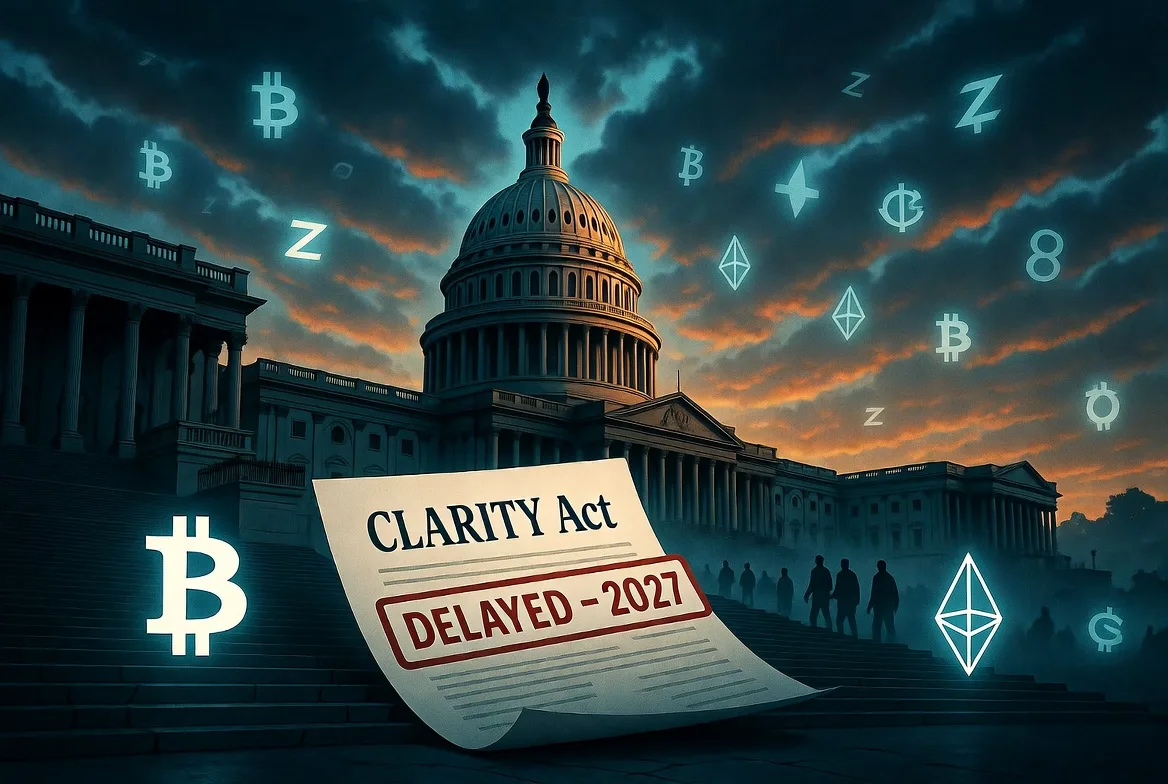
CLARITY Act Stalls as Thune Skips Cloture Filing, Odds Pushed to 2027
Senate Majority Leader Thune's decision to skip a cloture filing has effectively shelved the CLARITY Act before the August recess, with prediction markets now pricing passage into 2027 at best. Senator Lummis is pushing back hard, but the math on the Senate calendar is unforgiving.
By USA Crypto Group
## Senate Punts on CLARITY as August Recess Looms
The CLARITY Act — the most comprehensive crypto market structure legislation to reach the Senate floor in years — appears headed for a multi-month delay after Senate Majority Leader John Thune declined to file for cloture ahead of the August recess. Prediction market traders moved quickly: odds on passage now extend into 2027, according to data cited by The Defiant. Senator Cynthia Lummis, the bill's primary champion, is not accepting the delay quietly.
"If Clarity dies, Democrats killed it," Lummis said in a statement published by Bitcoin Magazine, framing the stall as a partisan failure rather than a scheduling casualty. She has continued publicly urging the Senate to act before members leave Washington, but without a cloture filing from leadership, there is no procedural path to a floor vote before recess begins.
Bitwise CIO Matt Hougan offered a more measured read, telling CryptoBriefing that the crypto industry will continue advancing even without the bill passing on the current timeline — pointing to regulatory clarifications already underway at the SEC and CFTC as evidence that the sector is not wholly dependent on legislative action.
## What the CLARITY Act Would Do
The bill is designed to establish a clear jurisdictional boundary between the SEC and CFTC over digital assets — the foundational legal ambiguity that has made institutional participation in U.S. crypto markets structurally risky for years. Without it, enforcement continues to function as de facto rulemaking, and token issuers operate under persistent legal uncertainty.
The stakes extend beyond any single project. A functioning market structure framework would directly affect how exchanges list tokens, how custodians price compliance risk, and how institutional desks structure positions in assets that sit in the SEC-CFTC gray zone. Traders in altcoins with unresolved securities status have the most direct exposure to the bill's fate.
CoinDesk noted separately that crypto's campaign infrastructure absorbed a rare loss in a recent primary — a Michigan House incumbent backed by approximately $2 million in PAC spending failed to survive — though the broader takeaway from that race was that crypto's congressional roster is still likely to expand. The political operation is intact; it is the legislative calendar, not the political will, that is blocking movement.
## What the Delay Means in Practice
With recess beginning imminently and the Senate returning to a packed fall calendar that includes budget and appropriations fights, a realistic window for CLARITY floor debate may not open until Q1 2027. Prediction markets already reflect that timeline.
For traders, the near-term implications are specific:
- **Altcoin listings remain constrained.** Exchanges operating under U.S. jurisdiction will continue applying conservative listing standards to tokens with ambiguous regulatory status until the SEC-CFTC boundary is codified in law.
- **Institutional product development slows.** Asset managers building structured products around mid-cap crypto assets need legal clarity to proceed. That clarity does not arrive on the current schedule.
- **Bitcoin and Ethereum remain the default.** Both assets have achieved sufficient regulatory definition — bitcoin as a commodity, ethereum increasingly treated similarly — to attract institutional capital regardless of CLARITY's fate. Everything else waits.
- **Prediction market pricing matters.** The move in CLARITY odds is itself a signal. Traders using political event contracts to hedge regulatory exposure should note the spread has widened considerably.
## What to Watch
Lummis has not indicated she will stop pushing. Watch for whether she forces a procedural vote before recess — even a failed cloture motion would put individual senators on record and create political pressure heading into fall. The Bitwise view — that the industry advances regardless — is reasonable as a long-term frame, but it does not address the specific projects and desks that are waiting on legislative resolution before committing capital.
The September Senate return date and the composition of the fall legislative calendar are the two variables that matter most from here. Until Thune signals a floor date, the CLARITY Act is parked.